

Smooth bromegrass and tall fescue seed production may be utilized as an alternative crop in primary grazing and haying stands. When used in this dual purpose, low seed yields can still offset production costs with the right market/contract. As with any alternative crop, it is essential to consult with seed dealers or potential buyers before harvesting to ensure that the correct procedures are followed.
Two important production practices for high seed yields include forage removal at seed stalk maturity and well-timed nitrogen (N) applications in late fall or early winter. Additionally, stubble height management (Figure 1) and pest control should not be overlooked. Seed yields often decline when the stand reaches three to four years old, but proper management can lead to 400 to 500 lbs per acre annually.
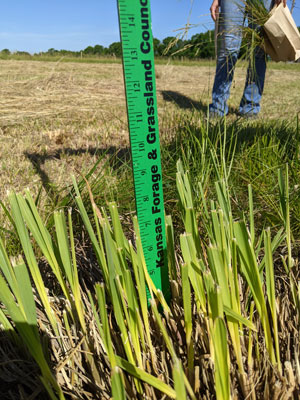
Figure 1. Ensuring your stubble height in both grazing and baling scenarios encourages longevity of stands, especially in dual-purpose situations. Picture provided by Wendie Powell of Wildcat District.
Fertilization
Seed head fill depends on proper N fertilization. Tiller formation does not drive N needs, but seed production demands 70 to 100 lbs N applied during December or January. Adequate moisture years demand the same rates for bromegrass seed production.
With regular N applications, soil pH tends to decline, calling for regular pH soil sampling and lime application to counteract soil acidification. Testing the pH, P, and K soil levels ensures proper amounts are available, and applications can be done if found to be critically low. For pH, pure grass stands need to be above 6.0, while grass-legume mixes need to stay about 6.5 to benefit the legume longevity.
Stubble Height and Grazing
Stubble should be clipped to a height of 3 to 4 inches as soon as possible after seed harvest to allow for tiller initiation at ground level with the increased light interception. Because bromegrass has fewer basal leaves, clip it no shorter than 4 inches high. In grazing operations, most seed production fields are grazed in the fall or winter, though grazing in the fall should be kept minimal to maintain a stubble height of 6 inches.
Pest Management
Weed management is critical to ensure clean seed that is free from quality-lowering quackgrass or annual brome, as well as the noxious weeds of Johnsongrass, musk thistle, and sericea lespedeza. Maintaining good soil fertility reduces the problems associated with weed invasion. Some issues (nematode or foliage feeding insects) can be limited due to the endophyte presence in tall fescue. Smooth bromegrass stands have experienced increased fall armyworm damage in recent years, largely due to highly prolific populations, partly attributed to increased Texas populations and above-average fall temperatures. Fertility management, cutting time, and well-timed insecticide applications used in conjunction may help with this growing pressure; however, research is still needed to quantify the return on investment.
From a disease perspective, stem rusts can cause issues in tall fescue, but can benefit from fungicide applications in these seed production fields due to the associated seed income. Before any application, knowing the level of rust and timing is key to the ROI. Regardless of the pest type, damage often worsens in dry, hot years.
For more information, please refer to the Kansas State University Extension publication MF924 “Seed Production Management for Smooth Bromegrass and Tall Fescue” at https://bookstore.ksre.ksu.edu/pubs/seed-production-management-for-smooth-bromegrass-and-tall-fescue_MF924.pdf
Tina Sullivan, Northeast Area Agronomist
tsullivan@ksu.edu
 Kansas Forage and Grassland Council
You must be logged in to post a comment.